Unifying ranks and building trust among all parties to ensure lasting peace and national stability. 🤝
Social justice
Equality in rights and opportunities that ensures the dignity of every human being. ⚖️
Civil state
A system governed by law that ensures citizens’ freedom and rights, free from military domination. ⚖️
Law and Constitution
The framework that regulates rights and duties and ensures justice and stability in society. 📜⚖️
Curriculum Vitae
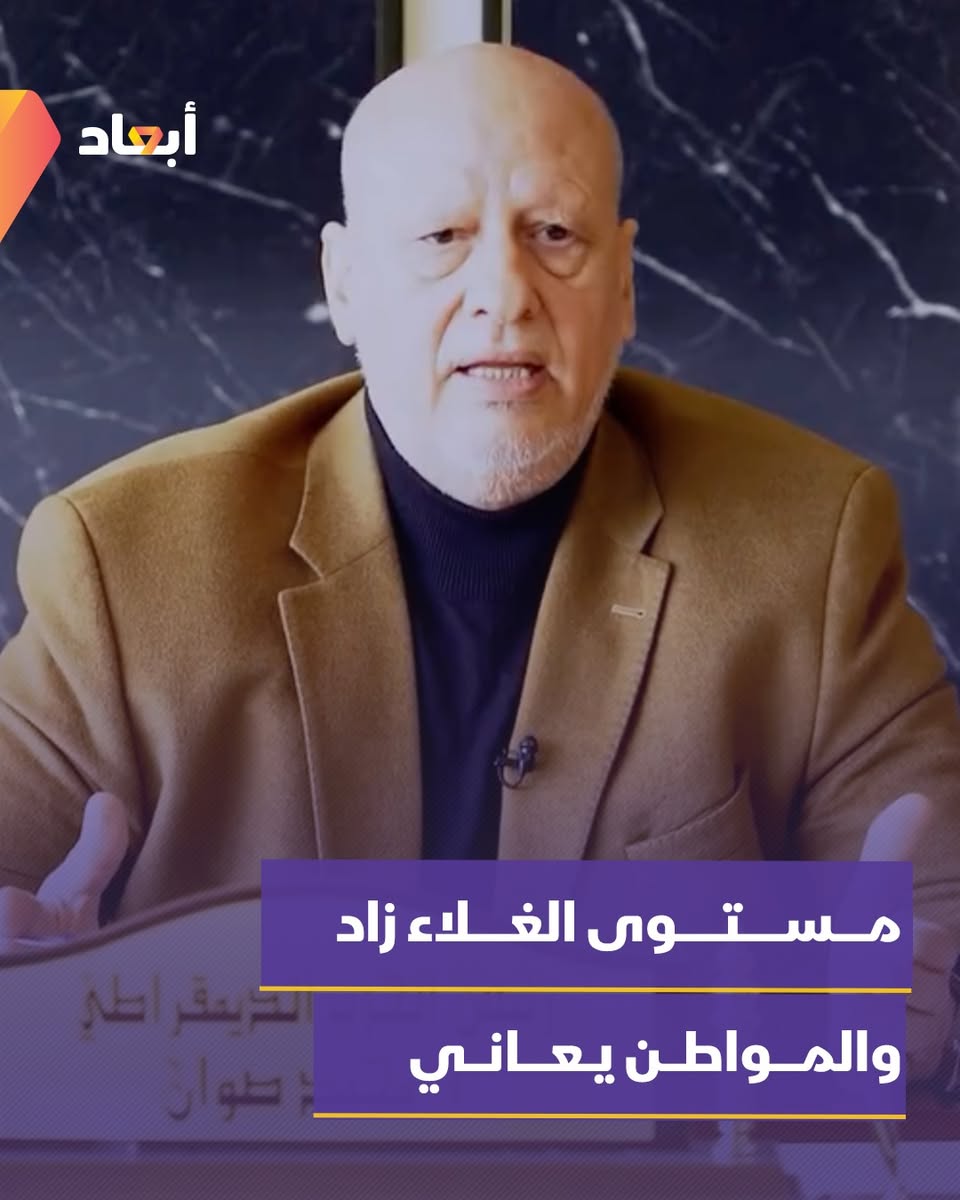
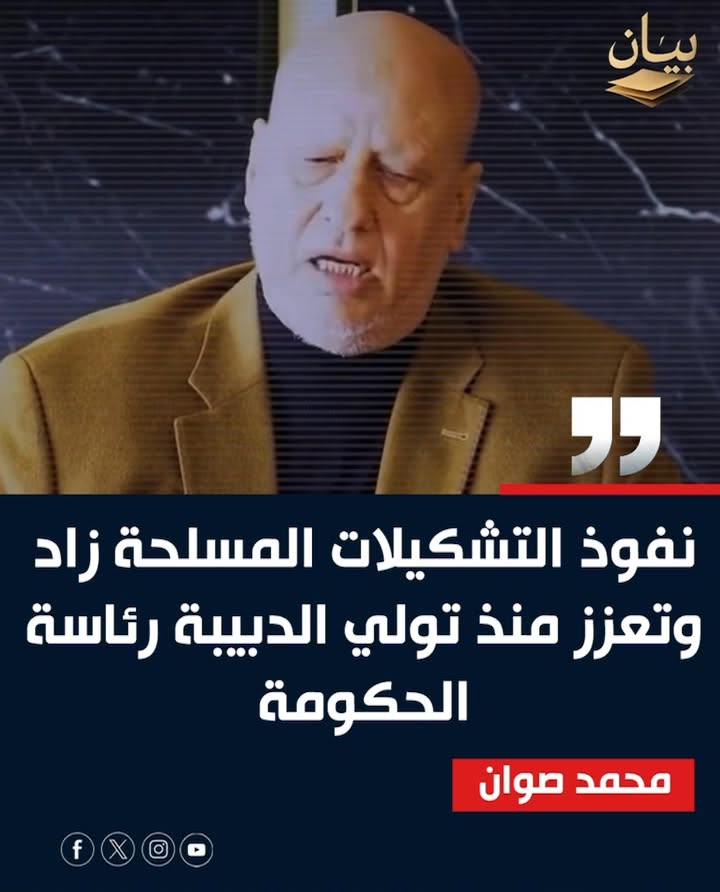
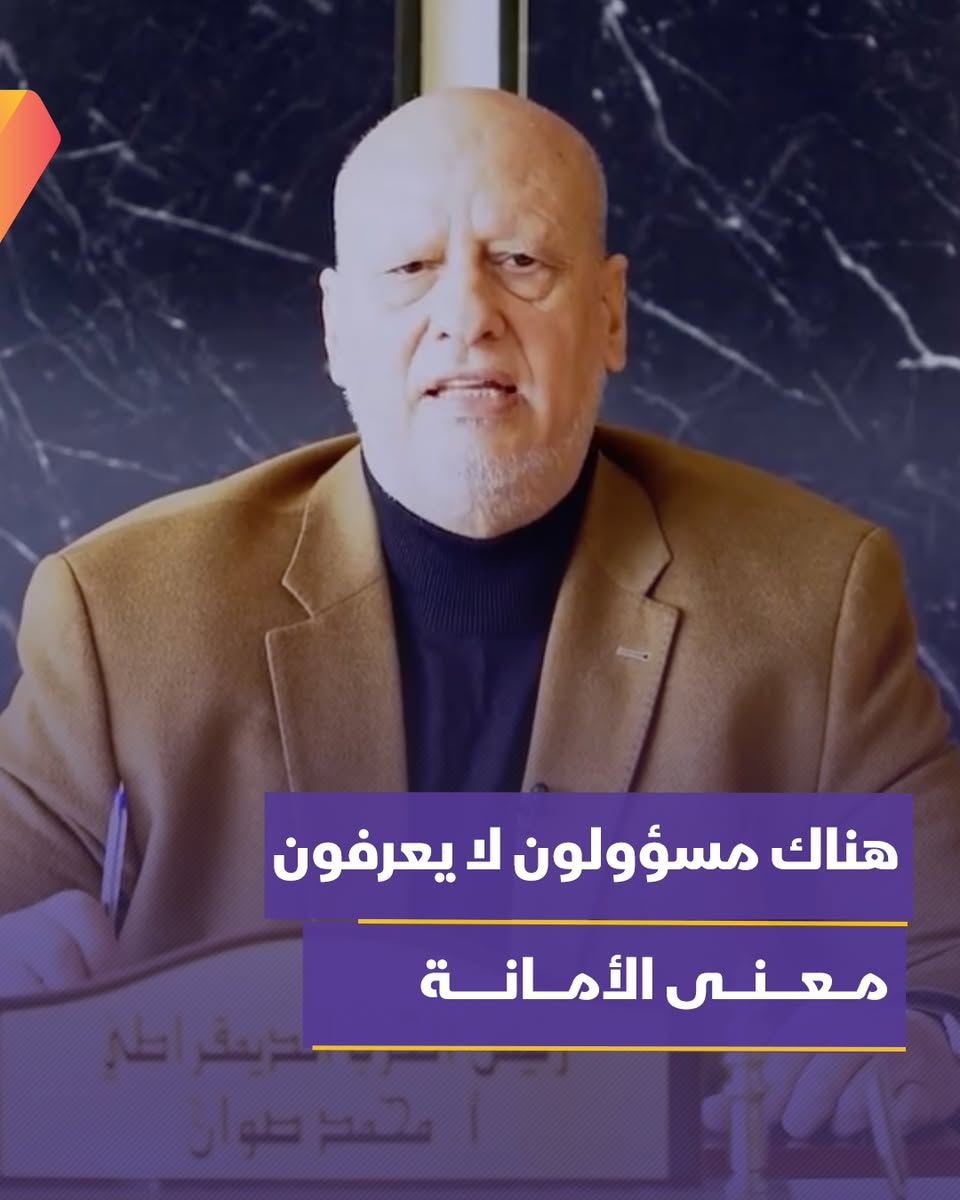
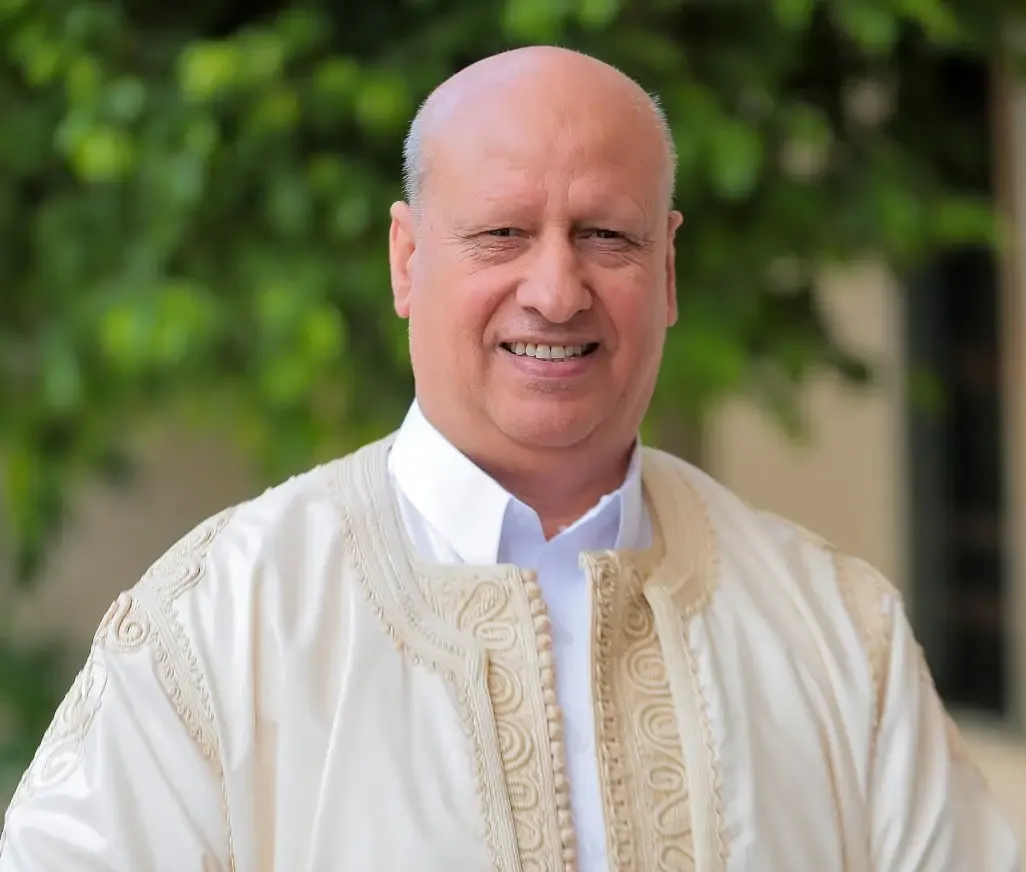
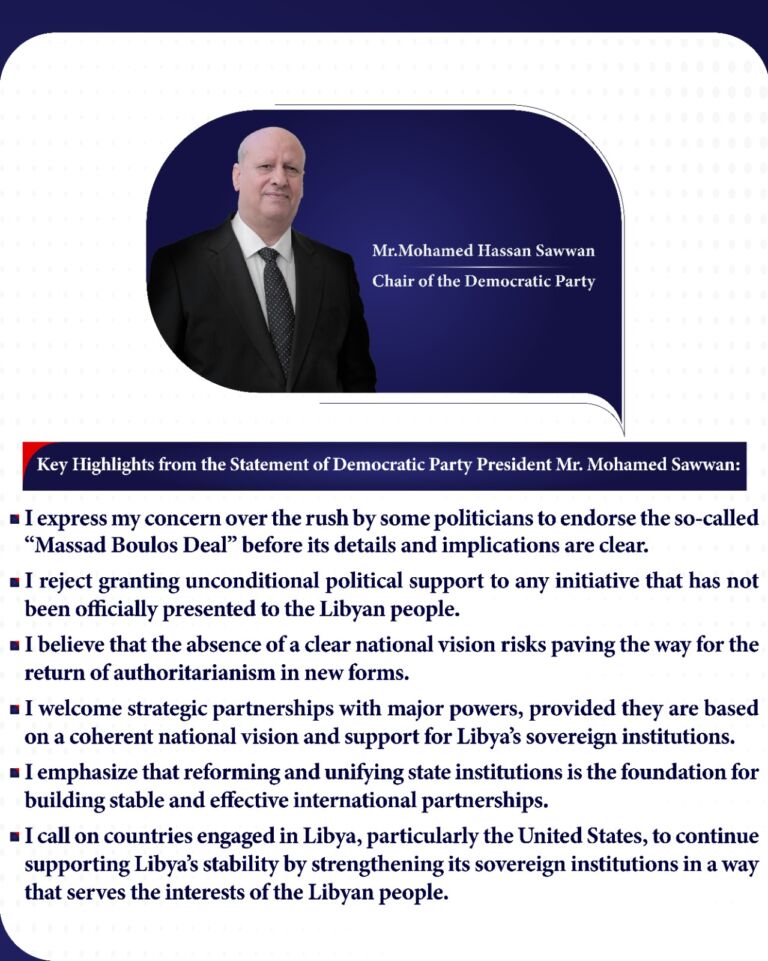
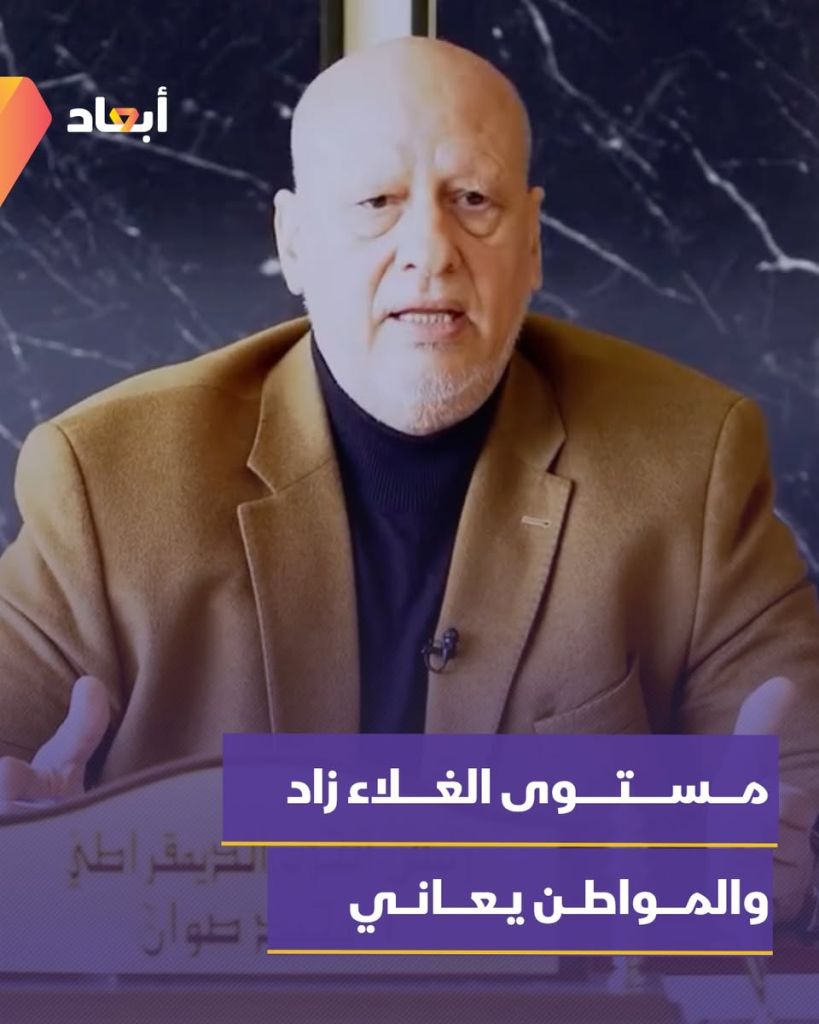
Mohamed Hassan Mohamed Sawan
Born: 1959 in Misrata, Libya
Educational Qualifications:
Bachelor’s degree in Sociology from the Faculty of Arts
Higher Diploma in Guidance and Psychological & Social Counseling
Professional Experience:
Worked as a secondary school teacher for 5 years
Worked in government investment for 14 years
Served as General Director of the Chamber of Commerce and Industry for 4 years
In Politics
He was sentenced to life imprisonment during Gaddafi’s rule for allegedly belonging to the Muslim Brotherhood, of which he served 8 years and was released in 2006. After his release, he actively engaged in politics, eventually being elected as the leader of the Justice and Construction Party. Under his leadership, the party won the second-largest number of seats in its first elections.
During his ten-year leadership, the party was described as a major force in Libya’s political scene, especially after the disintegration of the National Forces Alliance led by the late Mahmoud Jibril. He participated as a key party in the Skhirat dialogue and successfully supported the reconciliation process.
However, tensions emerged between him and the traditional Islamist current, both inside and outside the party, due to his commitment to dialogue and signing the Skhirat Agreement. The traditional Islamist current, led by Mufti Sadiq Al-Ghariani, became one of his most vocal opponents.
After a decade of leadership, he officially resigned from the Justice and Construction Party, citing several reflections. Among the most important, he emphasized that Islam is a common denominator among all Libyans, and no party should claim exclusive understanding or application of the religion. He also stated that methods used during the era of dictatorship, such as forming secret groups like the Muslim Brotherhood, were outdated, and he no longer supported them.
He called for the creation of a new party, free from past affiliations and open to all Libyans. The founding members chose the name Democratic Party, which was launched at the beginning of 2021, and quickly became a leading party in Libya, widely recognized as the first party in the country.
0
Date of Birth
0Years
Goverment Investment
0Years
General Director of the Chamber of Commerce and Industry